Frontier AI Models Enhance Simulation Development with NVIDIA Omniverse
NVIDIA Writers
The Skyward angle
The integration of frontier AI models with NVIDIA Omniverse libraries is revolutionizing simulation development, offering educators and learners new opportunities to explore complex scenarios and enhance design practices. By enabling interactive simulations for applications like humanoid robots and autonomous vehicles, this technology can facilitate hands-on learning experiences and improve problem-solving skills in STEM fields. As these advancements continue to unfold, they present valuable resources for teachers seeking to enrich their curriculum and engage students in innovative ways.
Based on NVIDIA AI BlogDevelopers are revolutionizing the process of creating simulations by leveraging cutting-edge AI models alongside NVIDIA Omniverse libraries. The integration of these technologies allows for the efficient assembly of assets, physics, and rendering that are essential for building robust simulation applications. These applications are instrumental in exploring various scenarios, investigating potential failures, and refining designs. By utilizing natural-language instructions, developers can now direct AI agents to carry out tasks, review results, and make necessary adjustments.
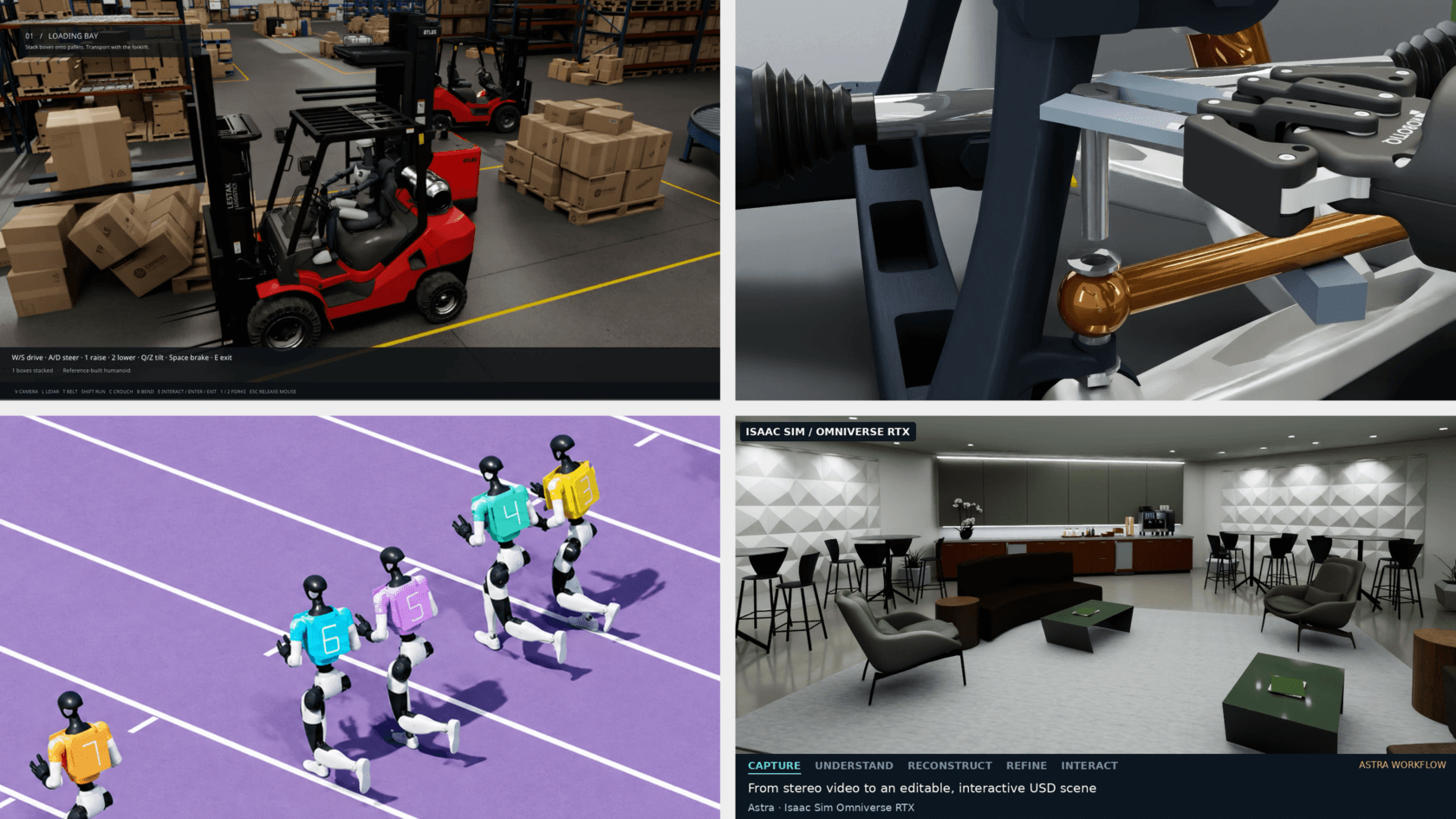
Projects utilizing these frontier AI models, such as the GPT-6 Astra, demonstrate their application in diverse fields. For instance, a humanoid simulator for warehouse environments has been developed, enabling developers to evaluate task behavior before automation. Similarly, autonomous-driving testing workflows have been enhanced to assess how changes in scenes, sensors, or driving models impact simulations. Digital twins have also been improved through sensor comparisons, allowing developers to refine scenes based on key performance indicators.
Why this matters
The integration of frontier AI models with NVIDIA Omniverse libraries presents a significant advancement in simulation development. This approach offers developers a streamlined method for creating complex simulations that can be applied across various industries, from robotics to autonomous vehicles. By enabling more precise simulations, these technologies help in testing and validating designs before real-world implementation, reducing the risk of costly errors and improving overall efficiency.
Moreover, the ability to direct AI agents through natural-language instructions simplifies the development process, making it more accessible to a wider range of users. This democratization of simulation technology could lead to increased innovation and faster development cycles, ultimately benefiting industries that rely heavily on simulation for research and development.
What it means for learners and teachers in Africa
The advancements in simulation technology can have a profound impact on education in Africa, particularly in fields that require practical, hands-on experience. Access to advanced simulation tools can provide students with virtual environments to practice and hone their skills, which is especially valuable in regions where resources are limited. For instance, engineering students can experiment with digital twins and robotics simulations, gaining insights that would otherwise be difficult to achieve.
Teachers can incorporate these simulations into their curriculum, offering students a more interactive and engaging learning experience. This can help bridge the gap between theoretical knowledge and practical application, better preparing students for the workforce. Moreover, as these technologies become more accessible and affordable, educational institutions in Africa can integrate them into their programs, ensuring that learners develop relevant skills that align with global standards.
What to watch next
As the use of AI models and simulation technologies continues to evolve, it will be important to monitor how these tools are further integrated into various sectors. Future developments may include more refined AI agents that can handle even more complex tasks with greater accuracy. Additionally, as simulation technology becomes more accessible, there could be an expansion in its use across educational institutions and industries in Africa.
Keeping an eye on how these technologies are adopted in education will also be crucial. The potential for these tools to transform learning experiences is significant, but it will require investment and commitment from stakeholders to realize this potential. As these technologies advance, they could play a pivotal role in shaping the future of education and industry in Africa and beyond.
Based on reporting by NVIDIA AI Blog. Written by Skyward.