Google's New AI Quest: Mapping the Human Brain for Young Learners
The Skyward angle
The launch of "Polar Peaks," the latest addition to Google's AI Quests series, offers students aged 11 to 14 an innovative way to learn about artificial intelligence and neuroscience. By engaging in activities such as scanning and mapping neurons, learners not only develop critical AI literacy skills but also gain insights into the importance of careful oversight in scientific research. This initiative, along with accompanying training modules for teachers, aims to enhance classroom learning and prepare students for future challenges in technology and science.
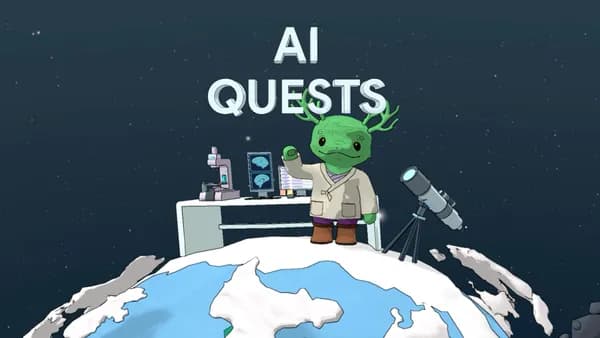
Based on Google AI BlogGoogle Research, in collaboration with the Stanford Accelerator for Learning, has introduced "Polar Peaks," the third installment in their AI Quests series. This educational initiative aims to teach students aged 11 to 14 essential AI literacy skills with a focus on neuroscience. The AI Quests series allows students to explore significant global challenges through the lens of artificial intelligence. To date, over 400,000 quests have been completed, and the program is available in 10 different languages.
The "Polar Peaks" quest takes students on a journey into neuroscience, where they use AI tools to map neurons in the brain. This exercise helps them understand memory loss in a game character. The quest is inspired by more than a decade of research in connectomics, which involves mapping neural networks in the brain. Students engage in various tasks, such as data cleaning and model testing, learning the importance of human oversight and critical thinking in AI applications. Upon completing the quest, students hear from researchers about real-world breakthroughs, including the comprehensive mapping of the fruit fly brain, the largest neuronal map achieved so far.
Why this matters
Educating young learners about AI is crucial as the technology becomes increasingly integrated into various aspects of life and work. By focusing on neuroscience, "Polar Peaks" not only familiarizes students with AI but also provides insights into scientific research processes. This experience can inspire future careers in STEM fields, addressing the growing demand for skilled professionals in technology and science.
What it means for learners and teachers in Africa
For students and educators in Africa, initiatives like AI Quests offer accessible opportunities to engage with advanced technology and scientific concepts. The availability of these quests in multiple languages is particularly beneficial in a continent with diverse linguistic backgrounds. However, challenges such as limited internet access and technological infrastructure may hinder some students' ability to participate fully.
Despite these challenges, AI Quests can play a significant role in enhancing digital literacy and fostering problem-solving skills among African students. The training modules for teachers can help integrate these quests into existing curricula, making AI education more relevant and contextualized for local needs. This could lead to improved exam performance and a better understanding of AI's role in addressing real-world issues.
What to watch next
As the AI Quests series continues to evolve, educators and students should look forward to additional quests that may cover a broader range of topics. The upcoming release of teacher training modules for "Polar Peaks" will be crucial in supporting educators to effectively incorporate AI education into their classrooms. Additionally, observing how these initiatives are adapted and implemented across different regions in Africa will provide valuable insights into their impact on education and skill development.
Based on reporting by Google AI Blog. Written by Skyward.